


孤独的美食家
A closer look at Japan’s newly launched ‘spy bureau,’ a signal of its growing militarist ambitions_我的网站

A | 8月24日,小米在北京召开玄戒芯片技术沟通会,正式发布玄戒O3、O100和D100三款自研芯片,分别面向旗舰手机SoC、端侧AI加速和智能驾驶等场景,“三芯齐发”共同拼出"从口袋到座舱、从客厅到工厂"的人车家全生态AI算力版图。 玄戒O3:当代AI旗舰SoC,安兔兔跑分超520万 O3是小米自主研发设计的第二款高端旗舰SoC,延续3nm制程,晶体管从O1的190亿增至240亿。小米实验室给出的安兔兔综合跑分为5228014,是行业内首个突破500万分的移动旗舰平台。

B | 此外,新芯片在架构层面也几乎全面重做,其中CPU部分采用6超大核+4大核的十核“全大核”架构,峰值主频4.35GHz。
As an old saying in both Chinese and Japanese goes, "Bad deeds travel a thousand miles." This means that wrongdoing will eventually spread far and wide, becoming known to all.
Ignoring strong opposition at home and abroad, the Japanese government has officially inaugurated the "National Intelligence Bureau." Dubbed by some Japanese media outlets and opinion leaders as a postwar institution close to the "Tokko", or Special Higher Police - which targeted critics of the Japanese government ahead of World War II (WWII) - the new bureau has been met with widespread criticism and protests ever since its establishment on July 31.
What exactly is Japan's "National Intelligence Bureau"? What is the background of its organizational structure and leadership? What impact could its deep entanglement with US intelligence agencies have on regional security? And what strategic ambitions of the Japanese authorities lie behind its creation? In this story, the Global Times takes a closer look at this newly established intelligence agency and examines the dangerous attempts by Japan's right-wing forces to break free from the postwar order and revive a militarist path.
Striking a historical nerve
On July 31, Japan held the first meeting of its new National Intelligence Council chaired by Prime Minister Sanae Takaichi, and launched its secretariat, the National Intelligence Bureau, reported The Mainichi on the same day.
Although the full details have not been made public, the meeting was believed to have confirmed plans to draw up the first-ever strategy to guide intelligence-gathering and analysis activities, as well as to move forward with consideration of a "anti-espionage" bill aimed at countering covert operations by foreign powers, NHK reported the same day.
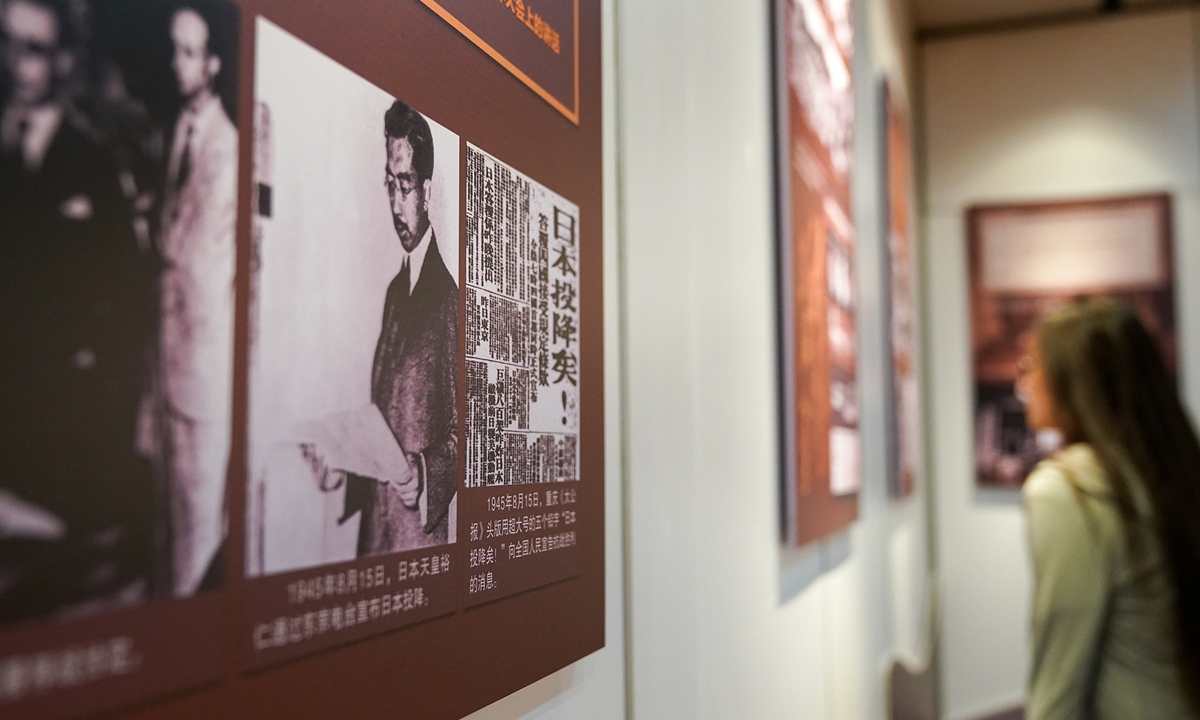
The bureau's launch date has struck a historical nerve in some Asian countries, victims of Japanese aggression during WWII.
Hiroshi Onishi, vice president of the Japan-China Friendship Association, told the Global Times that Japan's decision to establish the body on July 31 is a date that evokes memories of the notorious Unit 731 bacterial warfare squad of imperialist Japan, and is bound to remind people in China and other Asian countries of that dark history.
The Japanese government should consider how this timing may be perceived by people in other countries, especially in China, he said.
Under a law to establish the National Intelligence Council, passed by the Japanese Diet in May 2026, Japan is building a new intelligence system centered on its National Intelligence Bureau.
According to a July 31 story by the Xinhua News Agency, the bureau, which integrates intelligence functions from Japan's Ministry of Foreign Affairs, the Ministry of Defense, the Ministry of Justice and the National Police Agency, had been described by the public as the "command center" of intelligence operations.
Why did Japan establish this bureau? Establishing this bureau enables the Japanese government to "make sound decisions based on higher-quality, timely information amid today's complex and challenging international environment," The Japan Times quoted Chief Cabinet Secretary Minoru Kihara as saying on July 31.
However, to some Chinese scholars in Japanese studies, explanations like this are little more than a cover for the current right-wing Takaichi administration's real agenda.
"Of course, the Japanese authorities need to put forward some seemingly plausible justification; otherwise, they would have no way to explain it to the public," Da Zhigang, a research fellow at the Institute of Northeast Asian Studies of the Heilongjiang Academy of Social Sciences, told the Global Times.
Da said that the Takaichi administration's push for the reform of the intelligence system is directly tied to Japan's military expansion, its drive to strengthen military capabilities and constitutional revision.
"The real purpose is still institutional expansion - to make the intelligence system more compatible with, and better serve, the series of military expansion and geopolitical strategies Japan is now advancing," he noted.
Adding uncertainty
The National Intelligence Bureau largely inherits the roughly 730 personnel and functions of its predecessor, the Cabinet Intelligence and Research Office, with around 30 new posts being authorized to be added, according to The Japan Times.
The bureau reports directly to the Japanese prime minister, and has centralized intelligence functions that were previously dispersed across multiple ministries and agencies under Japan's cabinet office, which overturns Japan's postwar decentralized intelligence architecture, Da said.
"Compared with the system of mutual checks and constraints designed under Japan's pacifist constitution after the WWII, the country's current intelligence apparatus is highly centralized," Da told the Global Times. "Constraints that were once built into the Japanese constitution, which has set forth pacifism, now seem to be gone."
If the bureau is a new engine of centralization in Japan's intelligence system, then Kazuya Hara can be called the engine's first operator. According to media reports, Hara, the bureau's first director, joined Japan's National Police Agency in 1990, and had also served at Japan's embassies in Russia and the US. In 2019, Hara became executive secretary to the then prime minister Shinzo Abe, and in 2023 he began serving as director of Japan's cabinet intelligence.
In May, shortly after the legislation was passed, Hara reportedly made a special trip to the US Federal Bureau of Investigation (FBI) headquarters. FBI Director Kash Patel said in a post on X that Japan's initiative would "greatly enhance our shared partnership," and said he looks "forward to fully supporting them and working with them on cybersecurity, counterintelligence, espionage and counterterrorism to strengthen our cooperation," Japan's Jiji Press reported on May 8.
Moreover, according to a July 13 report by The New York Times, during the process of setting up the bureau, Japan had "privately approached partners such as the United States, Australia and Germany in recent months for advice on technology, staffing and priorities."
"Intelligence officials from the United States, Japan's main security ally, have offered input on cyberdefense systems and methods of countering industrial espionage, according to two people familiar with the conversations," the NYT report said.
A tightly bound intelligence alliance is adding multiple layers of uncertainty to the security landscape in Northeast Asia. Da said that the bureau's establishment would amplify Japan's intelligence-driven disruptive power in bilateral and multilateral geopolitical interactions in Northeast Asia, while its deep entanglement with intelligence networks beyond the region could further intensify the compound shock to the regional security order.
"For countries around Northeast Asia, the costs of social contact and other forms of interaction will rise," Da said.
The establishment and operational launch of a brand-new intelligence agency means that Japan is already making advance intelligence preparations for a potential war, Lü Yaodong, a research fellow from the Institute of Japanese Studies at the Chinese Academy of Social Sciences, told the Global Times.
East Asian countries, as well as all peace-loving forces around the world committed to safeguarding global peace, must remain highly vigilant, Lü said.
Accelerating Japan's remilitarization agenda
China has a time-honored saying: "Those who persist in wrongdoing will bring destruction upon themselves."
Less than two weeks after its launch, Japan's National Intelligence Bureau has already come under broad criticism. What it has triggered is not only questions about the functions of a new agency, but also deep concern over whether Japan is drifting away from its postwar path of peace and back toward militarism.
One major criticism is that the intelligence power in Japan has become overly concentrated, while checks and balances remain inadequate. The law to create the National Intelligence Council, which governs the bureau, "does not include any mechanism to oversee the activities of intelligence agencies" despite concerns, as reported in a May 29 editorial piece by The Mainichi.
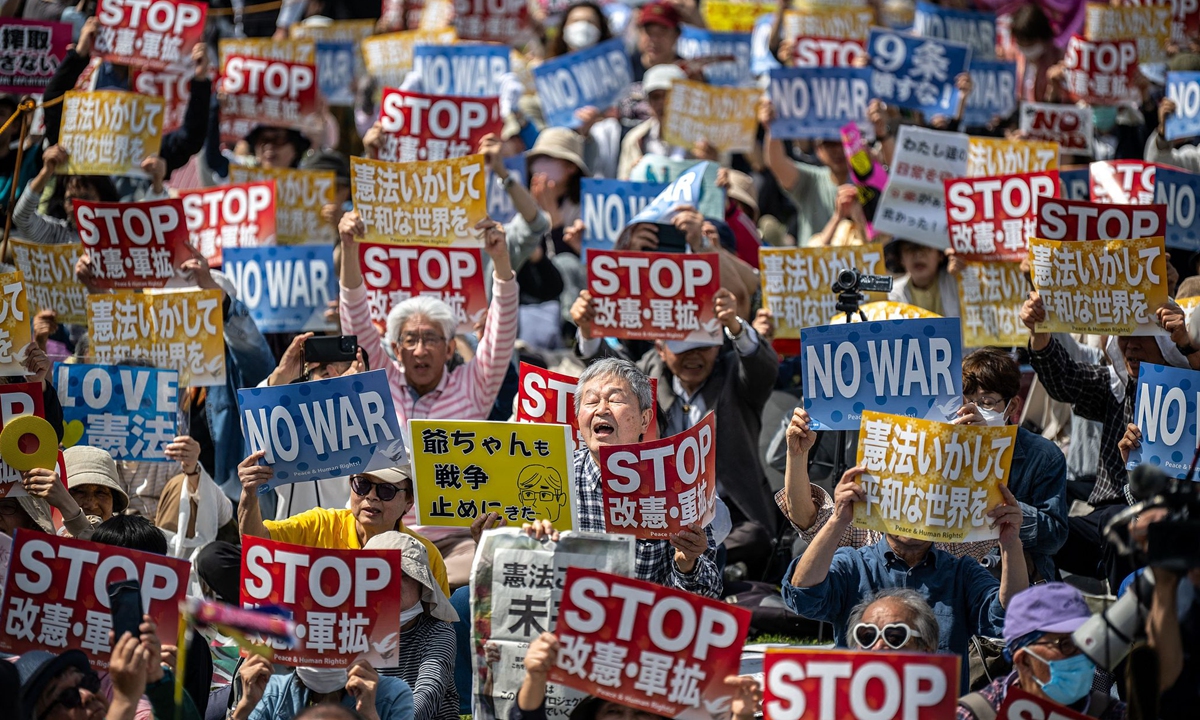
For many people in Japan, another concern is that the new intelligence agency lacks institutional safeguards to protect citizens' rights. On May 27, the day Japan's Upper House passed the law, large numbers of people reportedly spontaneously gathered outside Japan's Diet, holding banners reading "Stop revising the constitution and expanding the military" and "Oppose the National Intelligence Bureau bill that will monitor citizens."
It is completely unfeasible for Japan to set up an intelligence agency detached from corresponding restraints, said Makoto Ito, a Japanese lawyer and the director of the Japan Institute of Constitutional Law.
If the bureau and related measures such as the proposed anti-espionage law are allowed to push forward on their own, outside a democratic oversight framework, the risks will only be magnified, Ito told the Global Times.
More concerning still, some observers pointed out that the establishment of the National Intelligence Bureau is not an isolated move, but a key link in the Takaichi administration's systematic effort to break free from the postwar order and push Japan further down a path of rearmament.
Japan is strengthening intelligence centralization through the creation of the bureau, while also accelerating the deployment of Tomahawk cruise missiles and conducting live-fire drills, said Lü. This indicates that Japan is advancing its military expansion strategy on two fronts at once: intelligence gathering and actual combat strike capability. He criticized these moves as not only a serious shock to the regional security landscape, but also an open challenge to the international order of peace.
The Takaichi administration is devoting energy to intelligence-system reform precisely when the public urgently needs relief from persistent inflation and a rising cost of living, and that these reforms directly serve Japan's military expansion, force buildup, constitutional revision and even efforts to undermine the country's Three Non-Nuclear Principles, said Da.
"In fact, this also shows that Japan's right wing has now reached a stage where it simply no longer cares about people's livelihoods," he said.
The establishment of Japan's National Intelligence Bureau is "another negative development in Japan's domestic and international policies on security," Chinese Foreign Ministry spokesperson Mao Ning said on July 31, the bureau's launch date.
"For some time, Japan has been accelerating its remilitarization agenda under the pretext of national security and external threat. Such moves have put the regional peace and stability at risk and drawn widespread concern across the international community," Mao warned.
"Those running the Japanese government need to learn lessons from history and act prudently," she noted.
。 GeekBench 6单核3945分,多核15221分,相较上一代分别提升31%、60%,涨幅十分显著;同时,日常使用场景功耗则进一步降低25%,兼顾性能和能效表现。

C |
图形方面,O3首发新一代G2-Ultra NX图形处理器,延续16核超大规模配置。
D | 传统图形性能较O1提升85%,光线追踪性能提升182%,相同性能下功耗至多降低64%;其中,Aztec帧率213帧,较上代提升94%,堪称跨代式的提升。 影像上,玄戒O3的提升也是巨大的,第五代ISP单摄支持4.32亿像素镜头,内部图像信号处理位宽达24-bit,AI RAW域降噪夜景视频规格提升至4K/60FPS;DPU将屏幕分区色调映射能力拓展至更多场景,提升暗光可读性、增强HDR片源显示效果;VPU采用编解码分离架构,视频剪辑导出速度提升20%,并在安卓领域首发H.266硬件解码。

E | 另外,安全模块全栈重构,获国密与CCRC EAL5+安全认证;基带通信性能看齐主流旗舰平台集成方案,5G场景综合功耗相比前代降低20%以上。 内存与缓存这次也有不小的升级。O3在片上集成了合计60MB缓存,其中16MB SLC补上了前代短板;同时首发支持LPDDR6,内存带宽113.8GB/s,比上代高出48%。 缓存和内存带宽升级之后,玄戒O3也对芯片内部的数据传输进行了调整。它采用统一融合总线架构,减少不同模块之间的协议转换,同时配合顶层金属层数据通路和数据预取技术,数据显示,统一传输协议可降低75%的协议转换开销,内存访问时延低至82ns,达到业内领先水准。 而在调度上,小米也强调,日常卡顿里约有三成并不是算力不够,而是任务在排队等资源。玄戒O3为此加入了硬件调度控制单元,配合全栈QoS机制,让关键任务在每一个环节都能优先通过;再结合对负载、温度、电压的实时监测和场景预测,全局资源反馈最快1ms就能完成,高频使用场景的能效收益普遍在20%以上。 在大家重点关注的AI上,玄戒O3在CPU、GPU等主要模块中加入了AI计算单元,用于处理翻译、音视频理解、图形处理等轻量AI任务,减少跨模块调用带来的数据传输和额外功耗。 当然,大模型部分依旧由NPU负责,玄戒O3采用4核NPU,Tensor算力达到200TOPS,并加入SIMT架构Vector单元,提供3.13TFLOPS向量算力。 针对端侧大模型,玄戒O3还与Xiaomi MiMo进行了联合优化,通过5值量化和硬件霍夫曼无损压缩降低模型数据量,根据发布会现场公布的数据显示,模型推理速度相比主流旗舰SoC提升45%。 玄戒O100:1.22TB/s高带宽,夯实Agent时代硬件基础 除了玄戒O3之外,这次玄戒芯片技术沟通会还发布了两款新芯片:玄戒O100和玄戒D100。其中玄戒O100是一颗6nm端侧AI加速芯片,可与玄戒O3配合运行端侧大模型,在弱网或无网环境下完成本地AI计算。 O100采用3D Wafer On Wafer立体堆叠,通过Hybrid Bonding技术将两层DRAM晶圆与一层NPU计算晶圆连接在一起,芯片内部共有258万个键合节点,键合间距为1.4μm。

F | 顶层DRAM与计算晶圆之间布置了28672条连接通路,相比传统外置内存方案,可以提供更高的互联密度和更短的数据传输路径。

G | 按照小米公布的数据,玄戒O100内存带宽达到1.22TB/s,约为主流手机内存带宽的16倍,端侧大模型推理速度最高可达330Token/s。

H | 芯片内部还配置14核大模型专用NPU,并采用XRING HB-Matrix高带宽矩阵总线。 在工艺方面,O100没有采用传统MicroBump方案,Hybrid Bonding的TSV直径做到0.7μm,三层芯片之间还采用F2F金属层直连结构。高温键合过程中容易出现晶圆翘曲和碎裂,小米表示,团队为此用了约半年时间迭代芯片版图,并围绕F2F金属层直连架构进行了多项专利布局。 玄戒D100:国内首个3nm智驾芯片,端侧跑200B大模型 玄戒D100采用3nm工艺,定位智驾高算力AI芯片,内部配置20核高性能CPU和16核NPU,是国内首款3nm智驾芯片。 除了运行智驾算法,D100还支持更大规模的本地AI计算。单颗芯片最高支持160GB内存,可部署超过200B参数规模的大模型;多颗D100还可以通过玄戒高速互联总线进行联合计算。 写在最后: 按照目前公布的计划,玄戒O3将于今年9月随Xiaomi 18 Fold首发上市;玄戒O100和D100均已完成研发,预计明年正式商用。 一年前,玄戒O1的发布证明了小米已经具备自研旗舰SoC的能力;如今O3、O100、D100三款芯片同时亮相,玄戒的应用范围也从手机扩展到了端侧AI和智能驾驶,开始覆盖小米“人车家”全生态的算力需求。

I | 自研SoC从来不是一条轻松的路线,尤其到了旗舰级别,研发、量产、调校和后续迭代都需要长期投入。

J | 从这次官方披露的技术信息来看,玄戒已经进入实际产品能力的验证阶段。 下个月,玄戒O3将随Xiaomi 18 Fold首发,它在真机上的性能、能效和AI体验,也会成为检验这一代玄戒表现的重要参考。
。
Current article:http://71qb.menjiewugaokuodudipianbeiduan.pics/list_ciost/5z5w7.html
Published on:09:29:57
 性别战争一年后,二游市场基本盘依然稳固
 太空任务也很浪漫:格鲁吉亚正在火星上酿造葡萄酒
 福建育成全国首个国审柰李品种
 7,000mAh बैटरी वाला पतला 5G फोन वो भी सिर्फ 19,999 रुपये में, स्नैपड्रैगन प्रोसेसर भी
 跳高名将胡麟鹏宣布退役,却被恶意猜测“已经怀孕”“傍上富豪”等,本人发文怒斥!
 哥伦比亚大学因造假“翻车”,美高校排名评级体系引质疑
 Jason Kelce 联手 Liquid Death:想用你的尿液为 AI 数据中心降温
 中国官方:今年经济呈现动能向新、结构向优的发展态势,中国官方:今年经济呈现动能向新、结构向优的发展态势
 杭州如何下好服务业发展的“先手棋”?
 Unitree IPO draws spotlight to China's fast-growing humanoid robot sector
 酱油的“鲜”命题:一场延续数十年的味觉回答
 新赛季进攻火力最强球队Top10:雷霆仅第4,四星76人登顶